
Meet Beth Butler, Executive Director of A Community Voice in New Orleans and a Next Step Cohort member. She shares how partnership with the Climigration Network has changed what’s possible for her work organizing with residents in the city of New Orleans.
A Community Voice is a community-based nonprofit organization of working poor, elderly, women, children, and families that fights for social and economic justice for low- to moderate-income families in New Orleans’ 7th, 8th, 9th Wards and organizes with other members and community groups across Louisiana. Beth measures progress in small, hard-won steps. “One foot in front of the other is a good day,” she explains.
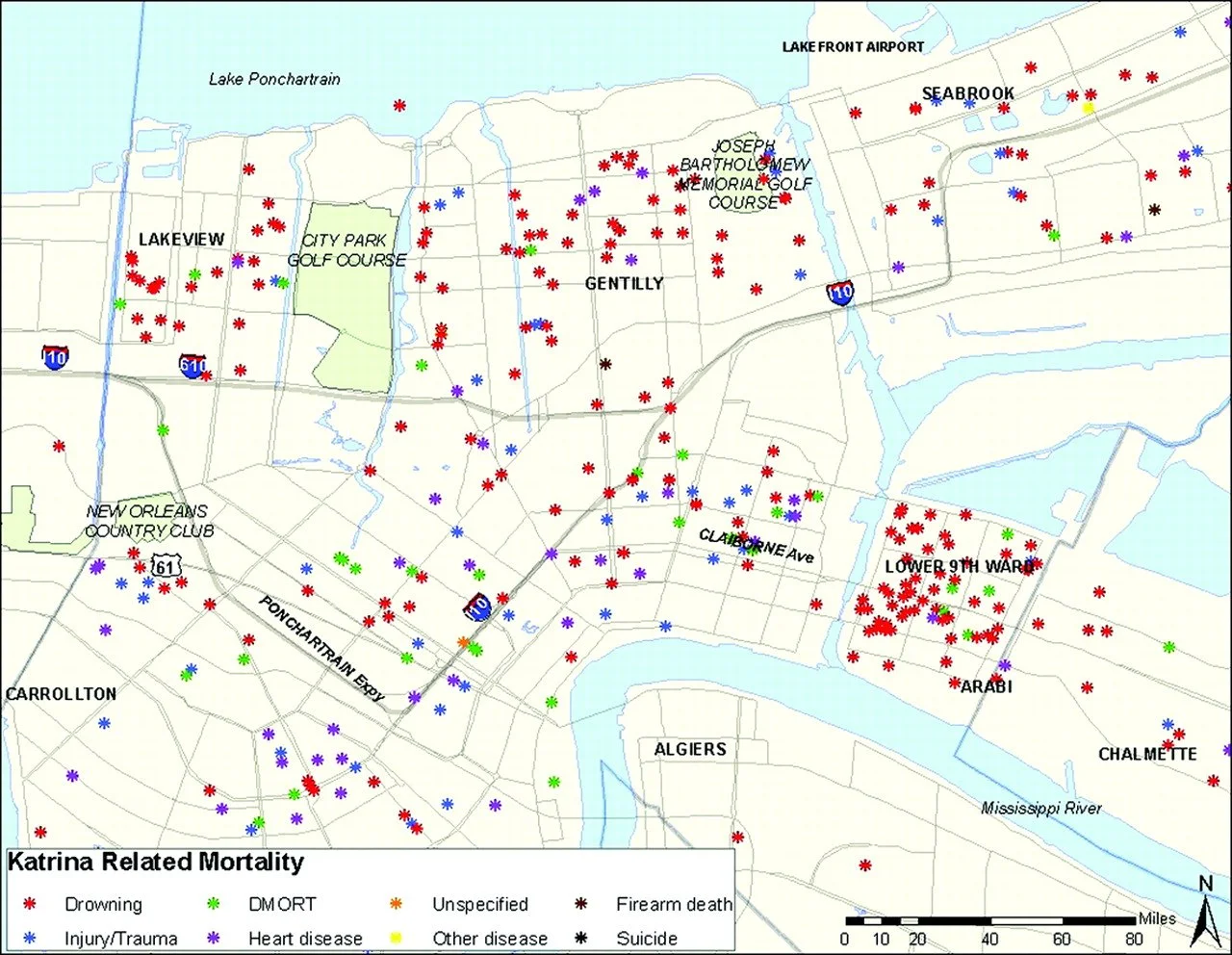
Hurricane Katrina left behind more than just floodwater. It left PTSD, fractured neighborhoods, and people wrestling with a question too heavy for most policy rooms: do we stay, or do we go? For New Orleanians, that question is loaded with layers. The cost of gas, the absence of cash reserves. The memory of a grandmother, elder, or ancestor who only left because the whole family was leaving. The human pull of home.
New Orleans sits along Cancer Alley, an 85-mile stretch along the Mississippi River in southeastern Louisiana. The corridor is dense with petrochemical plants and industrial facilities that have long poisoned the air, water, and soil of surrounding communities. These are the fossil fuel projects that generate profit at the direct expense of people’s lives and land. And with more slated for the region, when hurricanes arrive, the damage will be compounded. For people who call this region home, there’s no separating climate change from the industries that caused it.
This is the reality that A Community Voice refused to ignore and the reason why they started working with the Climigration Network. When Beth first engaged with the Network, conversations about a long-term plan to respond to increasing storm and flooding risk were "far more tentative than you can imagine."
At a moment when most institutions were not asking the hard questions about climate displacement, the Climigration Network built the infrastructure to make asking them possible. Through the Next Step Cohort, the Climigration Network brings frontline community leaders into a structured peer-supported process for confronting what climate mobility actually requires: not just emergency planning, but long-term, community-led visioning. The Network provided the framework, the expert partners, and the community of other frontline groups facing similar crossroads. This type of network building changed what was possible.
Now, three years in, evacuation and relocation are standing agenda items at weekly community meetings. Every week, 52 weeks a year, low- and moderate-income residents are working through what a community-led future could actually look like: temporary relocation, long-term planning, and the specific barriers that stand between their community and safety.
In part II of this blog, Beth will share the story of exploring two towns that could potentially become welcoming destinations for people needing to evacuate or even move.
About the Next Step Cohort
The Climigration Network’s Next Step Cohort is a group of community and Indigenous leaders from across the country sharing learning, funding, and capacity to build pathways to adapt to worsening displacement from climate and toxic pollution. Together, we:
Care for each other and ourselves more fully, sustaining strength, energy, and optimism
Leverage and share resources, ensuring that precious time, funding, and resources don't duplicate efforts
Have the time and energy to implement ideas, developing responses that make sense locally, with local partners
Scale feasible, thoughtful, dignified, and innovative responses, building on a broad base of experience and expertise
Build collective power to shape funding and policy systems and make community-led planning common practice across the nation
“We're now able to truly go forward with a community-driven relocation plan. I feel like that would not have happened if we hadn't been together, working with everybody in the Next Step Cohort, and really just constantly having the information, the support. From the beginning of our time partnering, we've really felt like we could have a way to be together and be comfortable to listen, align, grow, intensify.” – Debra Campbell, Chairperson, A Community Voice